
Last updated November 22, 2026
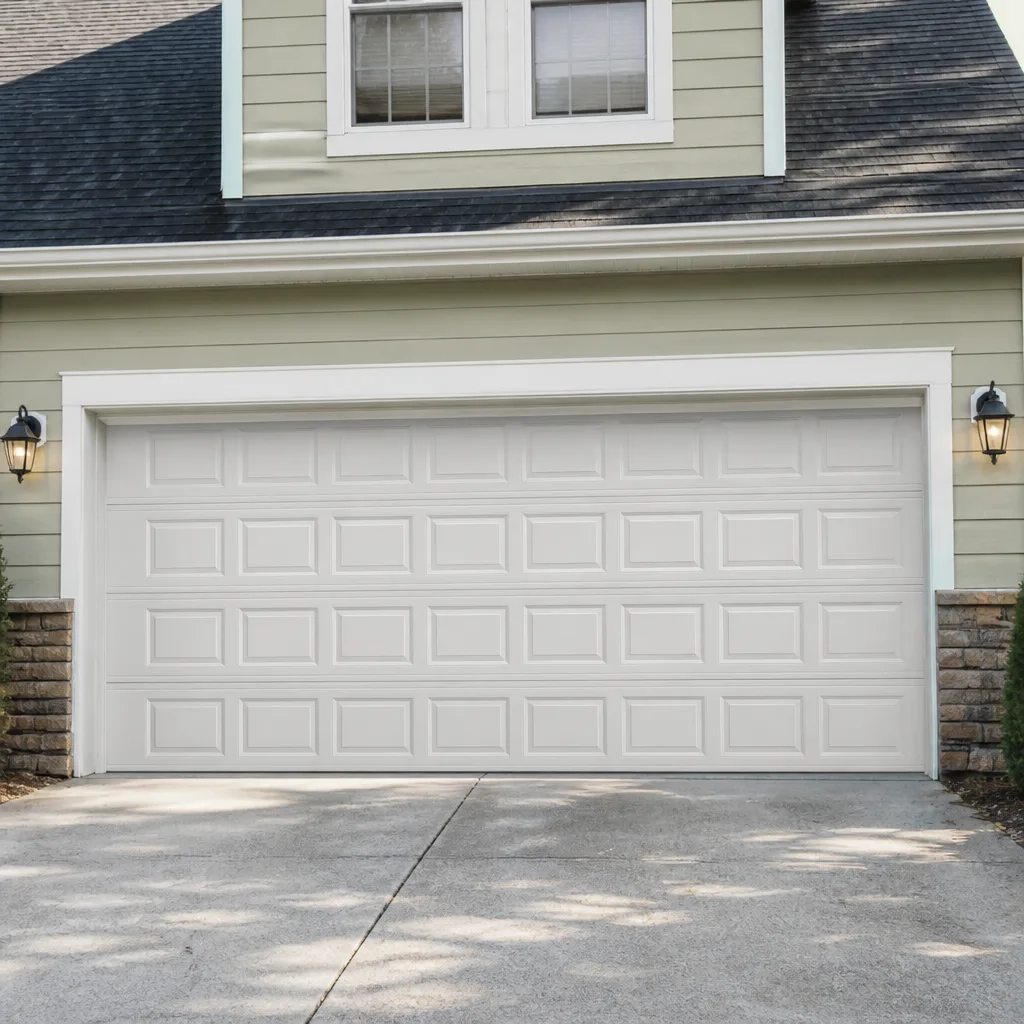 Raised-panel steel
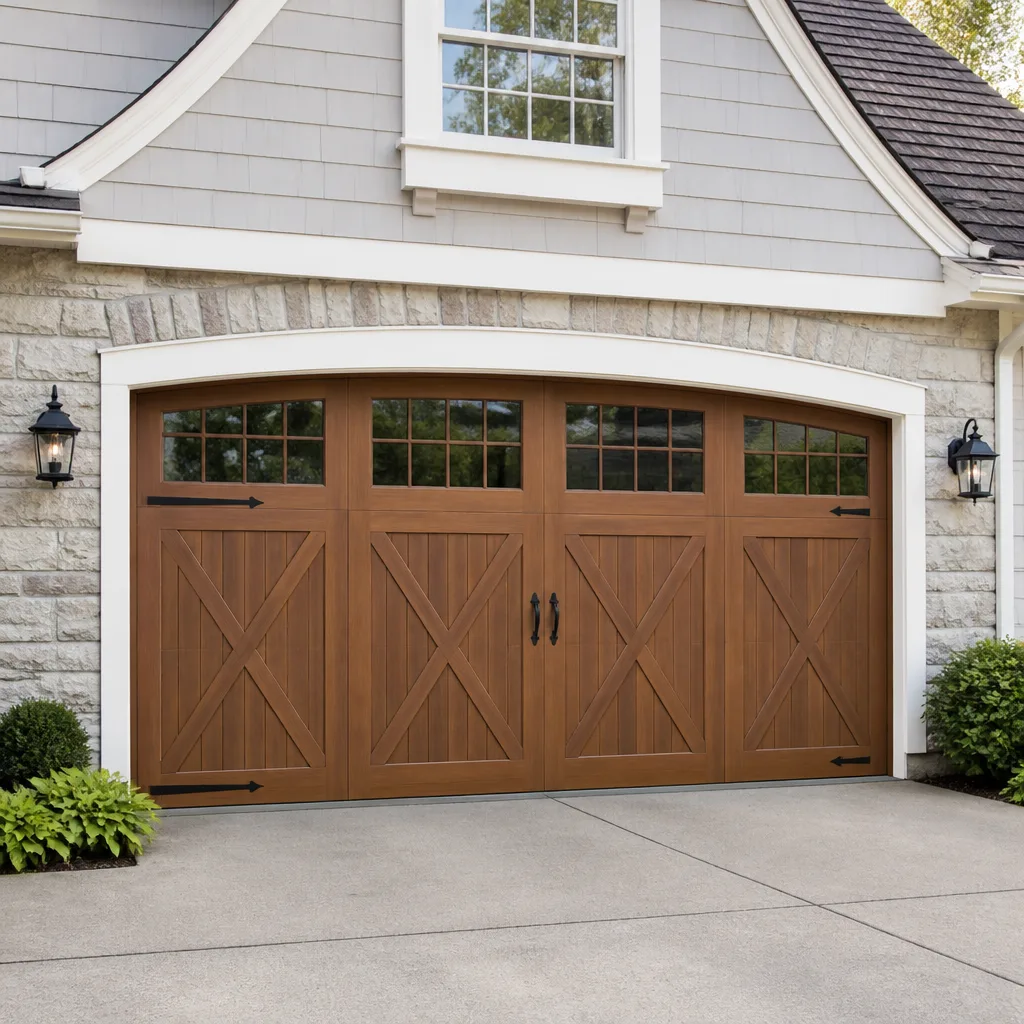 Carriage house
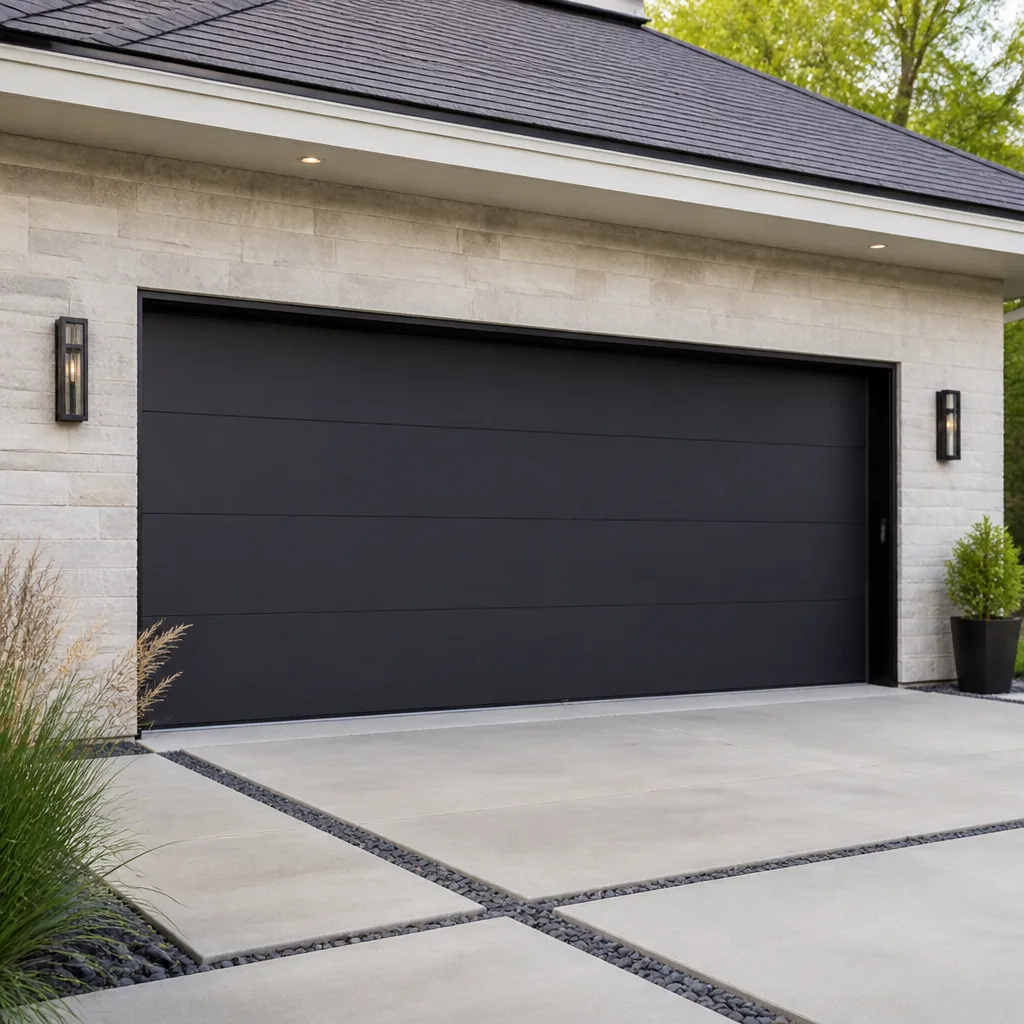 Modern flush
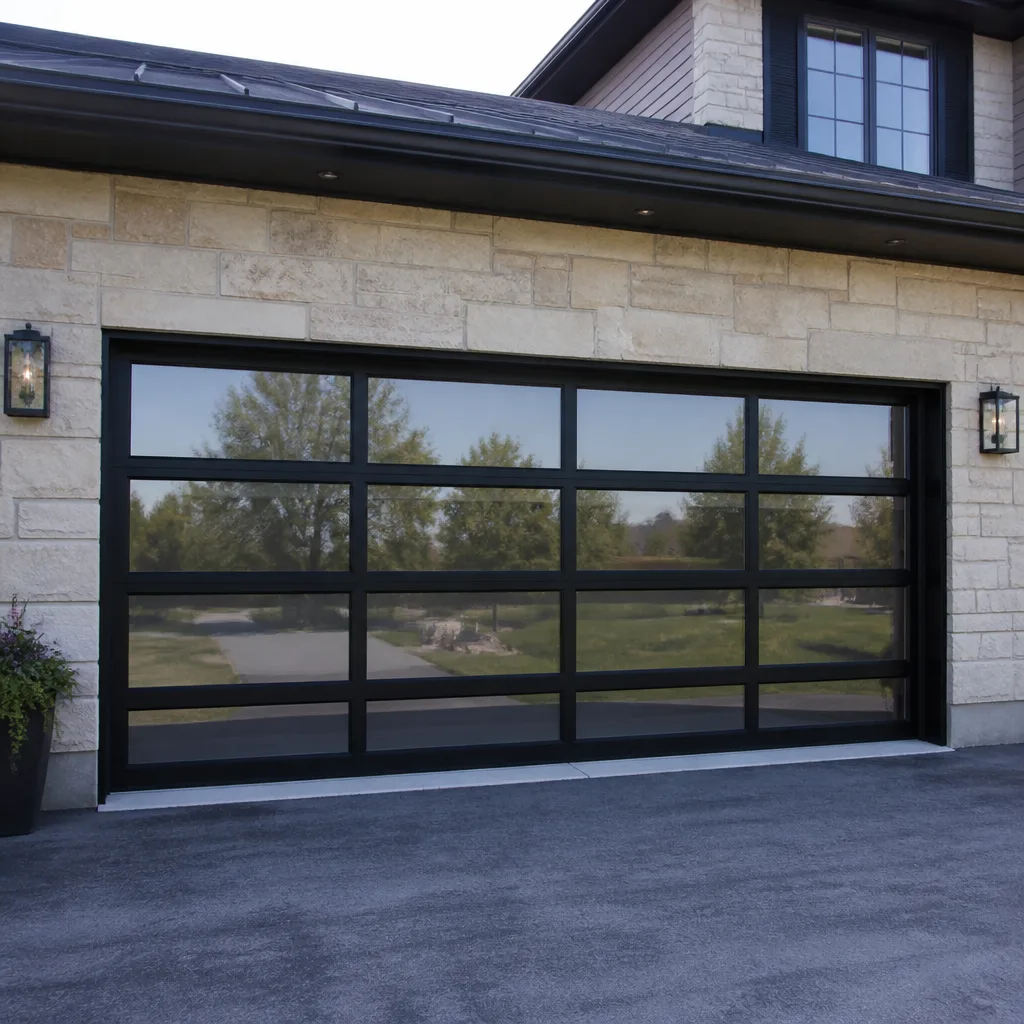 Full-view glass
 LiftMaster openers
 Chamberlain openers
Full 25-point door and opener safety check with every visit - springs, cables, rollers, tracks, and your LiftMaster or Chamberlain opener included
You get a price before we start. It does not change when the pro arrives.
Get your free estimateGarage Door Emergency Preparedness Guide for Gainesville Homes
The emergency you’re preparing for isn’t the one you picture. Most Gainesville homeowners worry about a spring snapping on a calm Tuesday morning. The truth is that a garage door emergency here tends to arrive with a name, on a weather radar, and about three days’ notice. That window of warning is exactly what makes it possible to prepare. What you do in the quiet weeks before a storm decides the outcome far more than what you do when the wind picks up. This guide covers how to read your door’s wind rating, how to secure a door you can’t replace in time, the inspection sequence to run after high winds, how to tell a structural emergency from a cosmetic one, and how to document storm damage the way a Florida adjuster actually wants to see it. We’ve written it from Gainesville, for the houses and weather that exist here.
Quick Answer
Garage door emergency preparedness in Gainesville means knowing your door’s wind-load rating before storm season, practicing the manual release so you can operate the door by hand, never bracing the inside of a door with a vehicle, and running a fixed post-storm inspection before you re-engage the automatic opener. Structural damage to tracks, panels or springs is a stop-until-inspected emergency; a bent bottom bracket or a torn weather seal is cosmetic and can wait for a scheduled repair. The homeowners who stay calm through a storm are the ones who did the checking in advance.
Styles & brands we work with
- Raised-panel steel
- Carriage house
- Modern flush
- Full-view glass
- LiftMaster openers
- Chamberlain openers
Table of Contents
- How to Find and Read Your Door’s Wind-Load Rating
- Pre-Storm Protocol: What to Do Before the Bands Arrive
- What NOT to Do When a Storm Is Coming
- Post-Storm Inspection: The Order to Check Things In
- Structural Emergency vs. Cosmetic Repair: How to Tell
- Documenting Storm Damage for a Florida Insurance Claim
- Why Brand and Opener Knowledge Matters Mid-Emergency
- What Happens After You Call
How to Find and Read Your Door’s Wind-Load Rating
A garage door’s wind rating is not printed on the outside panel. It’s a design spec tied to the door model, the glass and panel construction, and the reinforcement hardware that holds it to the wall – so the place to start is a sticker, label or model number somewhere on the panel or the door’s edge. Garage door manufacturers apply a permanent label to the door, usually near the bottom panel or the hinge side, that identifies the model. From that model number you can pull the manufacturer’s spec sheet, which lists the design pressure the door was rated for. If you can’t find the label, the doors installed by the big manufacturers – Clopay and Amarr among the most common on Gainesville homes – are searchable by model, so a photo of the label is the fastest path in.
What does the number mean in plain terms? Wind ratings are expressed as a design pressure in pounds per square foot. That figure tells you the wind speed the door and its mounting are engineered to resist, and it’s tied to a specific installation method. A door rated for a strong storm still fails if the spring system, hinges or jamb brackets have been replaced with the wrong parts, so the label is only half the story. The other half is whether the reinforcement hardware matches the model.
A quick practical check: open the door and look at the brackets that fasten the vertical tracks to the jamb. If you see short, thin brackets instead of reinforced ones, or if the door has been re-hung with mismatched pivots, the assembly may not be performing to the rating printed on the label. This is worth a professional assessment, because the difference between a rated door and a rated assembly is what actually protects the house.
Our technicians have up to 13 years of experience reading these labels, matching model numbers to spec sheets, and flagging assemblies that don’t measure up. If you want a straight answer about your door’s actual wind rating before the season turns, we’ll come out and tell you what we see. Call (844) 654-1981 for a free estimate. We answer 24/7. Fast dispatch from 7am to 7pm, Sunday through Friday.
Pre-Storm Protocol: What to Do Before the Bands Arrive
The useful hours are before the first band of rain. Gainesville sits inland enough that a landfalling storm weakens on its way in, but the outer bands still carry the kind of wind and horizontal rain that finds every gap a garage door leaves open. The list below is the sequence we’d walk a homeowner through two or three days out.
- Practice the manual release. Every automatic opener has a release cord or lever that disconnects the door from the motor so you can operate it by hand. Pull it, lift the door by hand, and lower it – calmly, once, in good weather. In a storm you may need to know how the door feels and how to move it when the power is out. This single rehearsal does more than any other prep step.
- Clear the track and the threshold. Debris, leaves and small branches in the track stop a door partway, and a door stopped partway is a door taking wind on the panel. Sweep the tracks, clear the threshold, and check that nothing is leaning against the door inside or out.
- Test the safety reverse. Lay a piece of wood or a rolled towel in the door’s path and close it. The door should reverse on contact. A door that doesn’t reverse is a hazard in good weather, worse in a power flicker.
- Check the weather seal. Kneel at the door’s bottom edge and look for light coming under the threshold. A tired bottom seal lets driven rain in and loosens the door’s grip on wind.
- Photograph the door as it is now. A clear set of photos before the storm is the single most useful thing you can own if damage happens. We’ll come back to this in the insurance section.
If your door is old, damaged or unrated, and a storm is already on the forecast, replacement is not happening in time. Doors are measured, spec’d and ordered to fit, which is why pre-season is the real window for that decision. But you can still do the release practice, the seal check and the clearing now. For a door that fails the pre-storm once-over, our garage door repair service can address worn seals, loose hinges and track issues before the season, and we’ll tell you honestly whether repair is enough or the door needs replacing.
What NOT to Do When a Storm Is Coming
The well-meant moves are often the dangerous ones. These are the things we’d rather you didn’t do, and the reasons why.
Don’t park a car against the inside of the door. It’s the instinct that surprises people: brace the door with the heaviest thing in the garage. A vehicle’s weight against a door panel doesn’t add strength to the assembly – it loads the panels in a way they were never engineered for and turns a wind failure into a two-way collision. If the door comes in, the car comes through the house. Leave the vehicle where it belongs.
Don’t prop or wedge the door. Boards, wedges or stacked boxes on the inside of the door are the same mistake in lighter form. They add pressure points and give you no way to release the door if it binds.
Don’t leave the opener engaged as if that protects the door. The opener is a motor, not a structural fastener. If your area is under a warning and you can’t get a professional out, disconnect the door and operate it manually; that way you’re in direct physical control of it.
Don’t try to fix a spring, cable or reinforcement mid-storm. The torsion spring is under enough tension to cause serious injury, and the cables are under matching load. A storm is not the moment. People do get badly hurt doing exactly this, which is why our garage door spring repair work is treated as a dedicated specialty rather than a side job.
Don’t assume a door that looks fine is wind-rated. A door that opens and closes quietly every day can still be an under-built assembly. The rating lives in the label and the hardware, not in the paint.
Post-Storm Inspection: The Order to Check Things In
When the bands pass and you walk out to the garage, the order you check things in matters as much as what you check. Do the inspection by hand, with the opener disconnected, before you press the button.
- Look at the door panels. Stand outside facing the door. Check for dents, bows, popped seams, cracked glass and separation at the hinge lines. A panel that has creased doesn’t recover, even if it closes fine. Note it.
- Walk the tracks. The vertical tracks on each side should be perfectly parallel to their partners and plumb. Look for bends, kinks, fasteners pulled out of the jamb, and gaps between the track and the wall.
- Check the brackets and hinges. The jamb brackets and hinges are the load path to the wall. Loose bolts, bent pivots, or a hinge plate that has pulled free are signs the assembly took a hit. Do not tighten any bolt that carries spring or cable tension yourself. Flag it and leave it.
- Eyeball the springs and cables. Look for visible gaps in a torsion spring, dangling cables, fraying, or a spring with a distinct snap where a coil has failed. Never touch them. Note the condition only.
- Check the seal and threshold. A bottom seal that has been forced or torn is a leak path and a sign the door has moved.
- Test by hand. With the opener disconnected, lift the door a foot and let it down. It should feel smooth and balanced. A door that binds, races down or feels much heavier than usual is telling you the spring or hardware needs a professional look.
- Only then re-engage the opener. If everything checked out by hand, reconnect and run it once. If anything felt wrong, leave it disconnected until a technician looks.
If the door or opener is fighting you at any step, our garage door opener repair service covers everything from re-engaging the drive to diagnosing a unit that ran while the wind was up. We’ll also tell you when the fix is a $40 part and when it’s a new unit.
Structural Emergency vs. Cosmetic Repair: How to Tell
The dividing line is simple: if the door’s ability to hold itself in the opening is in question, it’s structural. If the door still sits in its tracks and lifts under control, it’s cosmetic, and cosmetic repairs can be scheduled.
Structural emergency – keep the door closed and call a professional:
- Any panel visibly bowed, creased or separated at a hinge line
- Vertical tracks bent, out of plumb, or pulled loose from the jamb
- A spring with a snapped coil or a cable hanging loose or frayed
- Jamb brackets or hinges that have pulled free of the wall
- A door that drops or binds when operated by hand
- Any door that will not stay down and seated at the threshold
Cosmetic or scheduled repair:
- A bent bottom bracket or a scuffed threshold seal
- Weather stripping that has torn on one edge
- Paint chipping, rust spots or a scuffed panel that still seats properly
- A single dented section, as long as the surrounding panels and hinges are sound
When a structural failure is on the list, the safe move is to leave the door closed in its opening and arrange a technician. If it’s a door that is standing open and can’t be moved, call us and we’ll help you figure out the safest way to handle it. That’s an emergency situation for a stuck or broken door – not next-day scheduling. Call (844) 654-1981. We answer 24/7. Fast dispatch from 7am to 7pm, Sunday through Friday.
Documenting Storm Damage for a Florida Insurance Claim
A claim on a garage door lives or dies on the photos and the paper trail. Adjusters don’t want a story; they want to see the door, the mounting, the damage, and the date it happened. Here’s the set we recommend gathering before anything is moved or repaired.
- Full exterior shot of the door in its opening. The whole door, square-on, from the driveway. This is the “before” for what the assembly looked like.
- A close shot of the model or spec label. This is how the adjuster confirms the door was rated for the storm’s design pressure. If it’s not legible, take a second photo with a flashlight angled across the label.
- Mid-range and close-ups of each damage point. Each bent track, each dented panel, each lifted hinge gets its own photo. A wide shot with the damage circled also helps the adjuster orient.
- The interior of the garage. Damage on the inside often tells the adjuster a different part of the story than the outside. Take pictures of the tracks, brackets, and the wall or ceiling around the door.
- A photo of your pre-storm set, plus the weather report for the day. The date and time of the storm matter. A photo taken before the storm and one taken after is the strongest comparison an adjuster gets.
- Your written estimate. Get a written estimate for the repair before work begins if the damage is cosmetic, and let your insurer know if the door is a structural emergency and needs urgent attention.
One practical note for Gainesville homeowners: your garage door is often the largest opening in the house, which is why adjusters treat the wind rating, the door model and the reinforcement hardware so carefully. If you’ve lost the spec label, a photo of the model number is usually enough for the manufacturer to confirm the original rating – that’s a record pull we can do for you. And if the insurer needs a professional written scope, we can provide one.
Why Brand and Opener Knowledge Matters Mid-Emergency
When a door fails, the clock is already running. A generalist showing up for the first time has to diagnose the brand, figure out the parts stack, and often order what’s missing. A specialist walks in already knowing the equipment. We work on eight of the most widely installed brands in residential use – LiftMaster, Chamberlain, Genie, Clopay, Amarr, Wayne Dalton, Craftsman and Raynor – which means no referral runaround whatever is hanging in your garage. A Clopay with a torsion system and a Wayne Dalton with an extension system fail in different ways and need different parts.
The opener side is the same story. Wi-Fi and smart-home-enabled units from LiftMaster and Chamberlain behave nothing like a legacy Craftsman or an older Genie, and knowing which unit you’re looking at tells us which diagnostic to run first. That covers the modern app-connected openers as well as the older systems still doing daily duty on plenty of Gainesville houses. Brand knowledge isn’t a sales point – it’s how the first visit becomes the only visit. Same specialist, start to finish.
What Happens After You Call
Call (844) 654-1981 and the first thing we do is ask what the door is doing. A door stuck open with a broken panel is a different call from a door stuck closed after a track bend, and a door that won’t stay down is different again. We ask about your door type and opener, and the conversation tells us what’s coming to the job. Emergency garage door response is part of what we offer, and it’s real availability, not a marketing line – a stuck or broken door that creates a safety or security problem is what we’re set up for. We answer 24/7. Fast dispatch from 7am to 7pm, Sunday through Friday. A call outside dispatch hours is booked into the next opening, Sunday through Friday, 7am to 7pm.
Our technicians have up to 13 years of experience with doors and openers of every major brand, and they’ll tell you the price before any work starts, in writing. Repair first. Replace only when it makes sense. If the honest answer is that your storm-weakened door needs a complete replacement rather than a patch, we handle the full job under one roof – measure, order, installation – so you’re not coordinating a second contractor. You can start from Gainesville Garage Door Repair Co and we’ll walk you through the rest.
Common Mistakes to Avoid
- Bracing the inside of the door with a parked car. Weight against the door panel doesn’t add wind resistance; it turns a wind failure into a collision inside your garage. Keep the vehicle where it belongs.
- Pressing the opener after high winds without checking by hand first. A door that took an impact can bind partway and overload the opener motor. Disconnect, lift by hand, then re-engage.
- Measuring the door and buying a replacement yourself right before a storm. Doors are measured, spec’d and ordered to fit; a door that arrives too late is no protection at all. Order the replacement in the off-season or accept the storm with what you have.
- Leaving the door unrated or unreinforced because it “works fine.” On Gainesville’s tree-lined streets, plenty of doors have been quietly re-hung with mismatched hardware over the years. The label and the hardware are the only real proof of rating.
- Assuming a small dent is just cosmetic. A creased panel can mean the assembly has separated at a hinge line. Run the inspection sequence before you dismiss it.
- Taking photos for the insurer only after the debris is cleared. An adjuster needs the damage in the context of the assembly. Photograph first, repair second.
- Reaching for the spring with a wrench. Torsion and extension springs are under serious tension. Spring repair is not a DIY job, and a storm is the worst possible time to test that.
See the difference
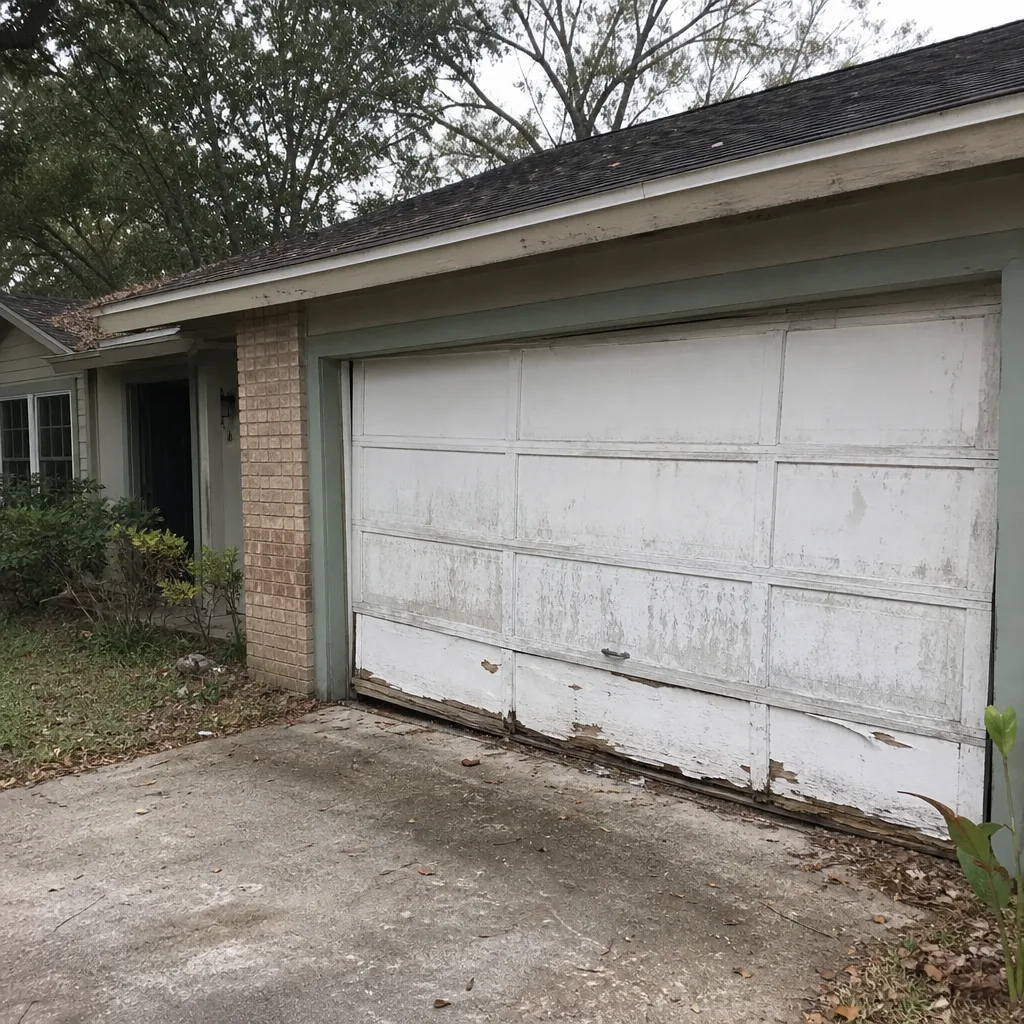 Before
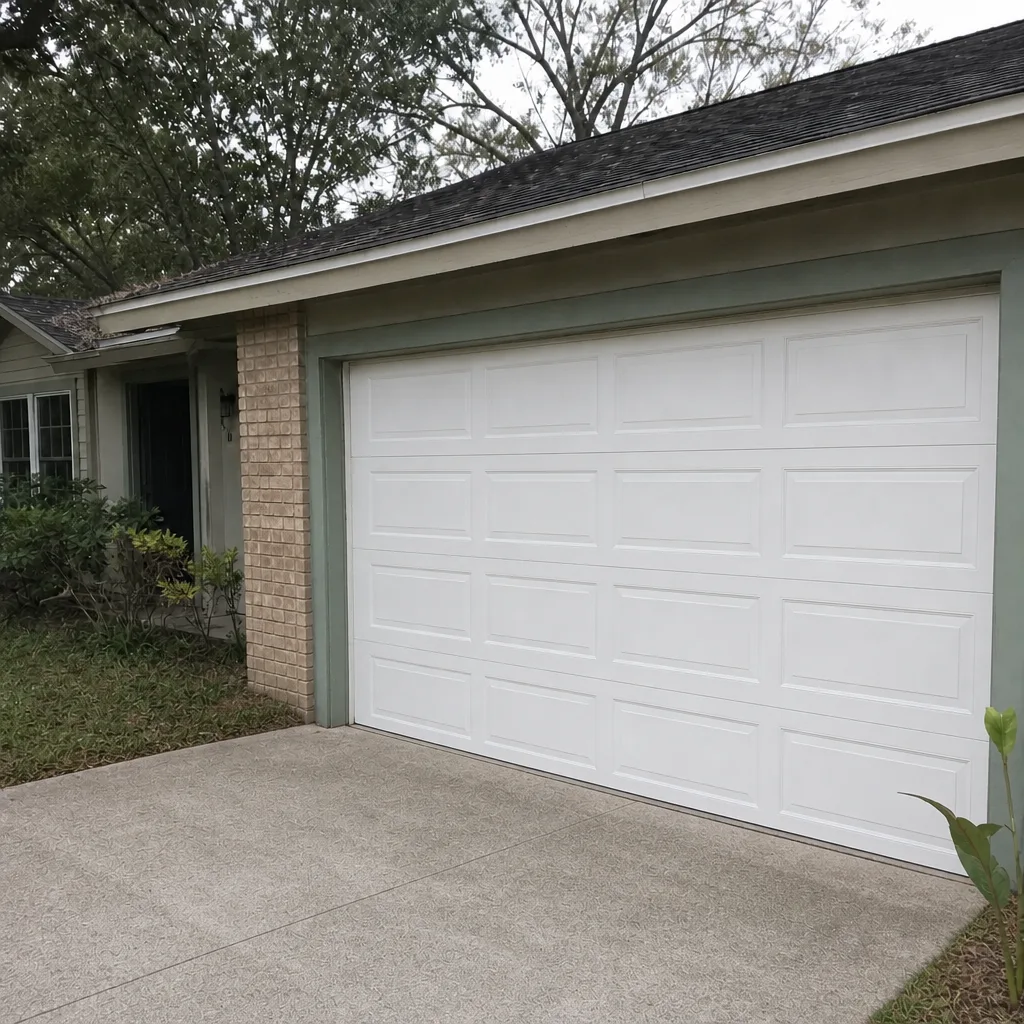 After
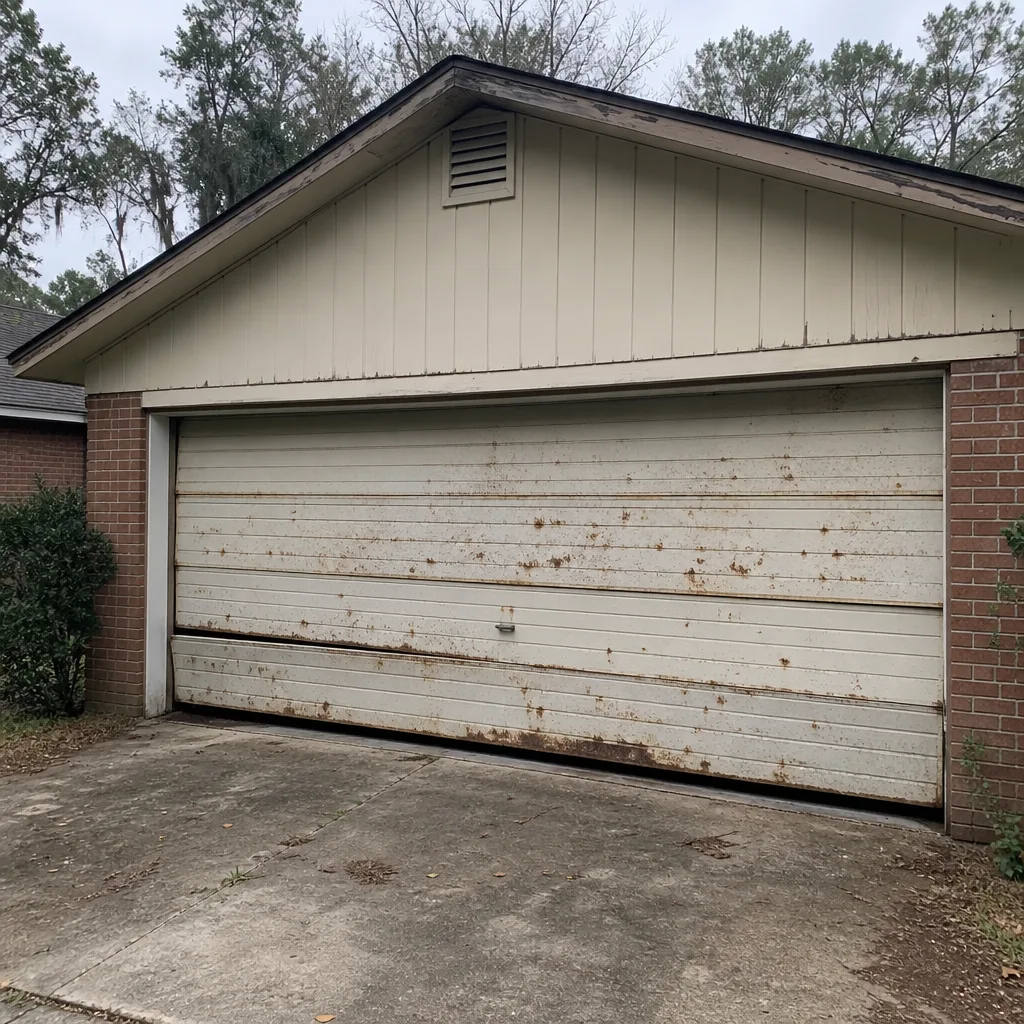 Before
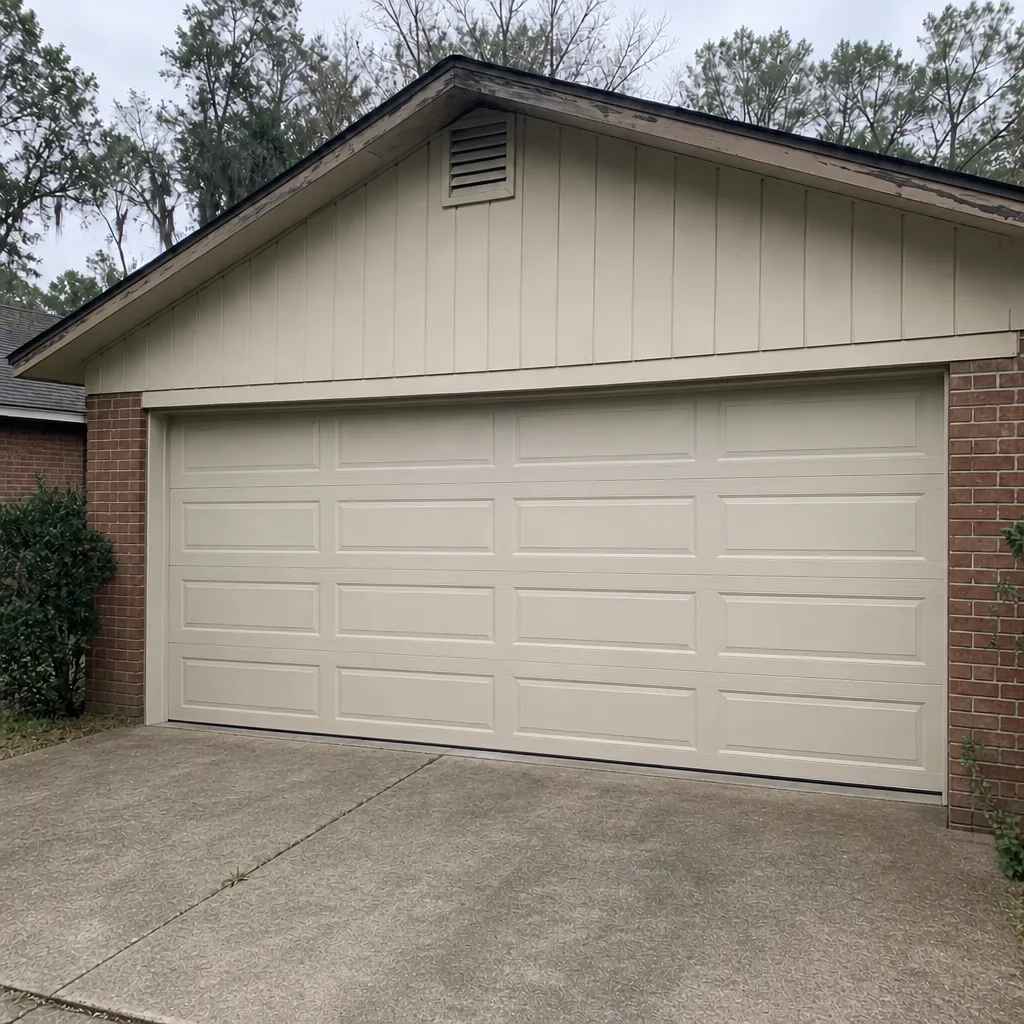 After
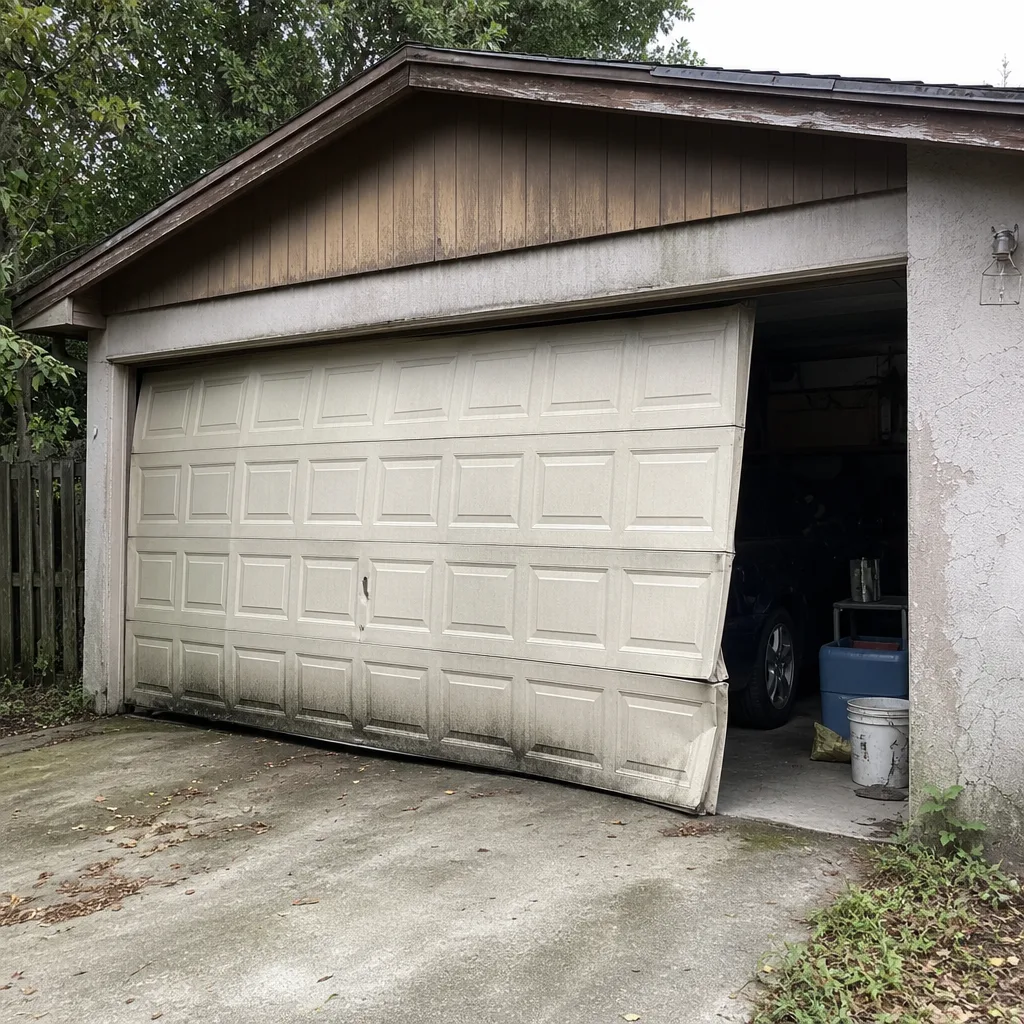 Before
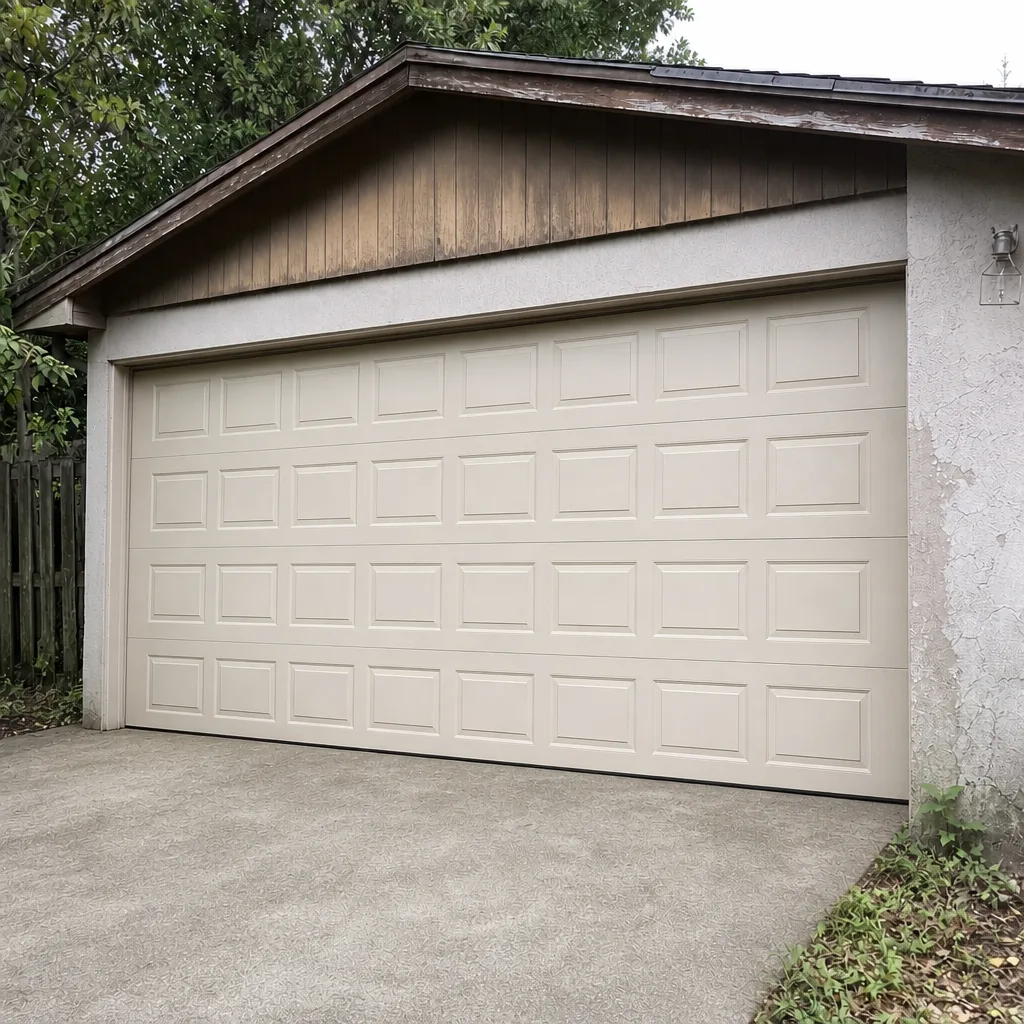 After
When to Call a Professional
Call us when the door is stuck open and your home is exposed, when the door is stuck closed and you can’t get out, when a spring has snapped or a cable has gone slack, or when a panel is visibly bowed – the sign that the assembly has lost its grip on the opening and should stay closed until a technician checks it. Call if a storm has passed and the door doesn’t run true by hand, or if your wind rating label is missing and you want to know whether the door will hold. And call if you simply want the door looked at before the season, so you’re not sorting this out in the rain. Gainesville Garage Door Repair Co offers free estimates in Gainesville – call (844) 654-1981. We answer 24/7. Fast dispatch from 7am to 7pm, Sunday through Friday. The estimate is free and the price is set per job in writing before any work begins.
Frequently Asked Questions
A permanent label on the door’s bottom or hinge-side panel identifies the model, and the manufacturer’s spec sheet lists the design pressure it was rated for. Most homes with Clopay or Amarr doors can look up the model and confirm the rating directly. If the label is gone, a photo of the model number usually gets you there.
Practice the manual release, clear the tracks, check the seal, and photograph the door as it is – then call us rather than trying a repair yourself. The replacement isn’t happening before the storm, but securing the door and knowing how to control it by hand is. Call (844) 654-1981 for a free estimate and we’ll advise on the safest path. We answer 24/7. Fast dispatch from 7am to 7pm, Sunday through Friday.
No. A vehicle pressed against the door panel loads the assembly in a way it was never built to take and turns a wind failure into a collision inside your garage. Leave the car where it belongs and use the manual release and clearance instead.
If the door’s ability to hold itself in the opening is in question, it’s structural. Bent tracks, creased or bowed panels, snapped springs, loose cables and pulled jamb brackets all mean the door should stay closed until a technician sees it. A scuffed seal or a single dented section that still seats properly is cosmetic and can be scheduled.
A square-on exterior shot of the whole door, a close-up of the model or spec label, close-ups of each damage point, interior shots of the tracks and brackets, and the date of the storm. A pre-storm photo side by side with a post-storm photo is the strongest single piece you can give the adjuster. A written estimate from the repairing company rounds out the file.
The local professional we connect you with is licensed and insured as their state requires. Our technicians have up to 13 years of experience with doors and openers from every major brand, and the price is quoted and agreed in writing before any work starts. Call (844) 654-1981 for a free estimate.
The Bottom Line
Preparedness is cheaper than recovery. Before the season, find your door’s model label, confirm the wind rating on the spec sheet, and rehearse the manual release once. In the warning window, clear the tracks, check the seal, photograph everything, and never brace the door with a vehicle. After the storm, run the inspection by hand – panels, tracks, brackets, springs, seal – before you re-engage the opener. A bent track or a bowed panel means the door stays closed until a technician looks at it. Everything else can be scheduled. And if you’d rather have a professional confirm where your door stands before the next named storm heads for Gainesville, we’ll come out and give you a straight answer.
Call (844) 654-1981 for a free estimate. We answer 24/7. Fast dispatch from 7am to 7pm, Sunday through Friday. The estimate is free, and every price is set per job in writing before work starts.
Written by the team at Gainesville Garage Door Repair Co.